


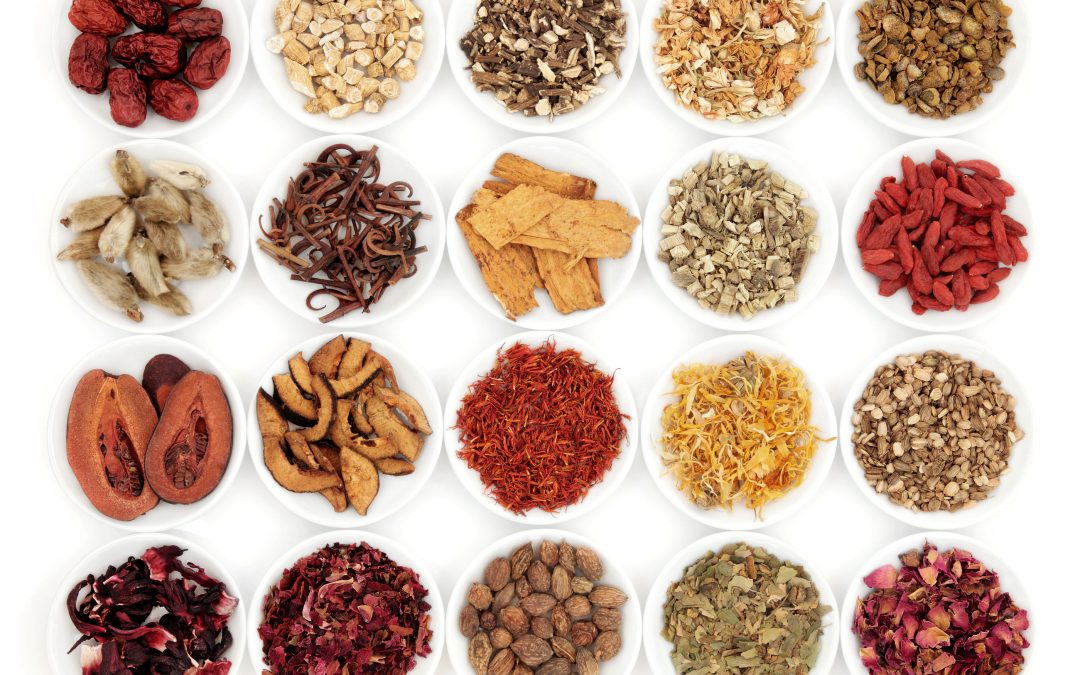
Chinese herbs can be very effective, if a bit odd. Sometimes they aren’t even plant based but are made from a variety of organic materials. Often, Chinese herbs are used in combination with other herbs to make the perfect formula. Seeking a knowledgeable herbalist is important when taking many herbs to avoid contraindications with some pharmaceuticals, supplements, and even other herbs.
Some seemingly “odd” Chinese herbs used in teas, cooked formulations, tinctures, powders, and pills include:
Flying squirrel feces (wu ling zhi) is an herb that moves blood and alleviates the pain associated with menstruation, including irregular periods, painful periods, and abnormal uterine bleeding. This herb inhibits platelet aggregation, reduces blood viscosity, and can help relieve muscle spasms.
Cicada moulting (chan tui) is commonly used for loss of voice and swollen, sore throats. It can help clear rashes and treat red, painful, swollen eyes. Interestingly, this herb can be used for childhood night terrors. Chan tui is made of chitin, which is antimicrobial and anti-inflammatory, both which link chan tui’s function to immune regulation.
Charred human hair (xue yu tan) is frequently recommended for uterine bleeding and nose bleeding. The hair is specially processed and made into a powder. For a nose bleeds the powder can be blown into the nasal cavity to stop bleeding. For uterine bleeding it can be encapsulated and taken orally. Hair is made up of amino acids that make keratin, as well as carbon, oxygen, nitrogen, hydrogen, and sulfur that all contribute to the healing properties of xue you tan.
Earthworm (di long) is used for hypertension, to calm wheezing, and for hot, painful urinary difficulty. Di long properties are antispasmodic, anti inflammatory, and antipyretic.
Cuttle fish bone (hai pao xiao) stops uterine bleeding and vaginal discharge. It can be used to cure diarrhea and acid reflux, as it lowers stomach acid because of the calcium carbonate found the bone. Topically, hai pao xiao is also used for nonhealing skin ulcers.
Human placenta (zi he che) can help postpartum mothers with energy, lactation, depression, and night sweats. It can be steamed with lemon, ginger, and Szechuan pepper and then dehydrated, ground, and encapsulated. It can also be blended and then consumed or even baked in the oven. The chemical composition of zi he che is complex, containing a multitude of hormones including gonadotrophins, prolactin, oxytocin, thyroid-stimulating hormone, sex hormones, cortisone, interferon, urokinase, prostaglandins, lysozyme, kinase, histaminase, oxytocinases, hemoglobin, phosphorus, and sugars. The functions and healing properties of zi he che extend to immune regulation, energy, and hormonal balancing, which are particularly wonderful postpartum.
There are plenty of herbal concoctions that I don’t use in my practice, like bear gallbladder, deer antler, shark fin, gecko, seahorse, turtle shell, anteater scales, wingless cockroach, scorpion, centipede, and many other animal bits.
Contributor
Acupuncturist, herbalist, Maya abdominal practitioner, and reflexologist Christina Morris is the founder of Element Natural Healing Arts. Writing about health and wellness gives her an outlet to express her care and concern for her beloved community. She believes everyone can achieve better health and happiness–emotionally, physically, mentally, and spiritually.