


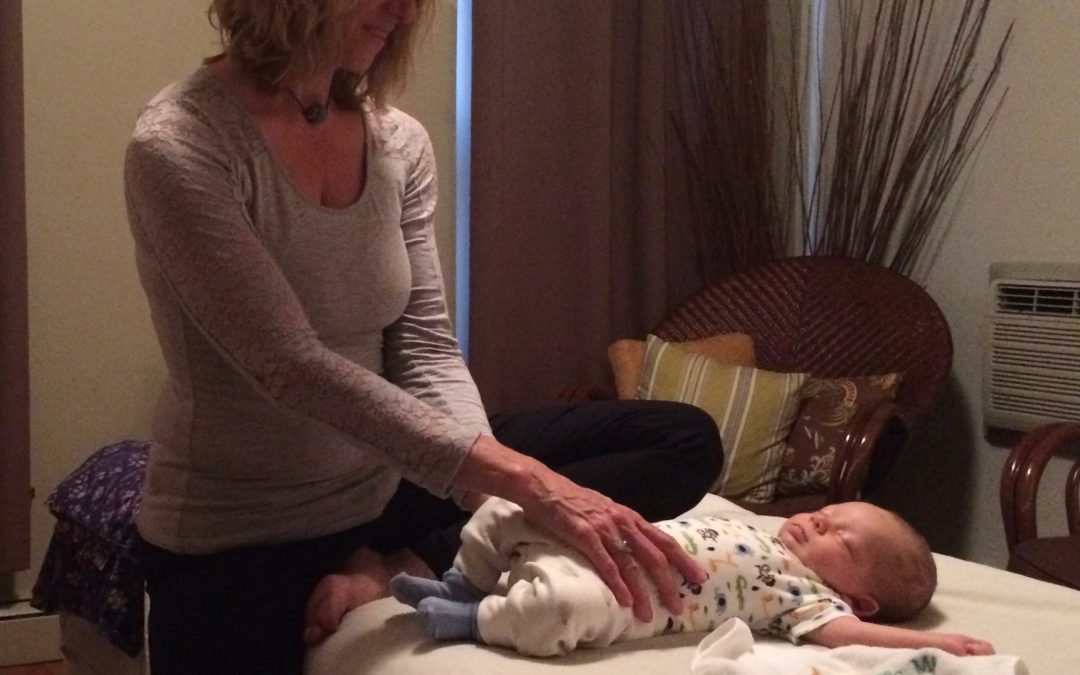
From photographs, the first few months of baby’s life often look like pure bliss. Reality is a lot different. In truth, all newborns struggle to learn how to live in the first few months of life, some more than others. Certain babies have trouble latching onto their mother’s breasts when they are first breastfeeding. Others have reflux or excessive gas, causing them to wail in discomfort constantly. Some just seem like they’re in pain, and nothing can make them feel better.
Craniosacral therapy is a wonderful and effective method for easing an infant’s suffering. It involves the gentle re-alignment of the cranial bones, as well as massaging the membranes and fluid that protect the brain and spinal cord. Noninvasive and calming, it can improve sleep, eating, digestion and overall mood. Craniosacral therapy is practiced at Element by Patricia Hogan, who has over 15 years of experience in the field, and over 25 years of experience working with children.
Below, Patricia answers questions about what craniosacral therapy is, why your infant might need it and what you can expect when you book an appointment.
What is the Craniosacral system?
Patricia Hogan: Even though the craniosacral system is not very well known, it is central and vital to the body’s well being. It is the system in the body that protects the brain and central nervous system, and is connected to the rest of the body through the fascia system. There are three main structures of the craniosacral system. First there are the bones that surround the brain, and the vertebral bones that encase the spinal cord and all of the nerves coming out of the brain. Then, there are three layers of membranes that line the inside of the skull bones and vertebral column. Within these membranes moves a fluid called the cerebral spinal fluid. It is the function of the cerebral spinal fluid to nourish the central nervous system as it circulates around the brain and spinal column. If any part of your baby’s craniosacral system has become jammed, it can limit the flow of the cerebral spinal fluid, and this limits the amount of nourishment and protection the central nervous system can receive. This can affect the baby’s functioning and well-being in different ways.
Could my baby benefit from craniosacral therapy?
PH: If your baby has difficulties with breastfeeding, either due to poor latching abilities, a weak suck or poor tongue control, this may be due to constriction in the movement of bones, cranial nerves or muscles around the jaw. Food regurgitation, reflux and excessive gag response also can be caused by restrictions around the cranial nerves. Sleep disturbances, seizures, bowel disorders (diarrhea or constipation), colic and respiratory difficulties can be supported and relieved through craniosacral therapy. Misalignment of the skeletal system, such as curvature of the spine, torticollis or a misshaped head can be gently influenced back to correct alignment with therapy.
What are some conditions that may lead to the craniosacral system becoming jammed?
PH: Difficulties in labor and delivery, such as abnormal presentation, prolonged delivery, use of vacuum extraction, forceps or c-section can alter the way the cranial bones should be positioned. If the baby’s position within the mother’s womb is compromised for an extended period of time it can cause disproportionate lengthening or contraction of musculoskeletal alignments. Exposure to toxins can tighten the membranes in the craniosacral system. Injuries to baby such as being dropped or a car accident can shift any part of the craniosacral system. Maternal infection in the last six months of pregnancy or emotional upset while pregnant can also cause damage to the delicate functioning of the fluids and membranes of the system.
How can craniosacral therapy help?
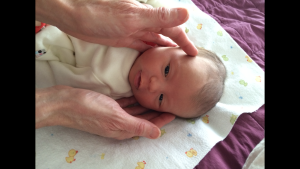
PH: Craniosacral therapy is a gentle hands-on technique that corrects the alignment of the cranial bones, restores elasticity and necessary movement of the membranes, and supports the pumping action of the cerebrospinal fluid to circulate around and nourish the nervous system.
Will craniosacral therapy be painful for my baby?
PH: It is not painful or uncomfortable for your baby to experience. In fact, it is usually calming. Babies often either drift off to sleep, or become more alert, increasing eye contact and making communicative sounds while they are receiving the treatment. It usually does not take a very long time for corrections to be made because the baby’s young body is very adaptable. The sooner problems are treated, the easier it is for proper alignment and functioning to be restored.
If you would like to book an appointment at Element with Patricia, follow this link.
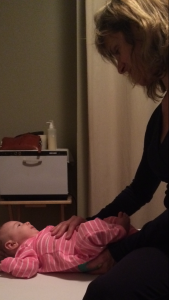
Patricia is a Registered Polarity Therapist and Craniosacral Therapist with over 15 years of experience. Since 2001, she has been finely tuning her gifted hands through training and practice to delicately perceive the movement of cerebrospinal fluid through the body’s craniosacral system. Her therapeutic touch helps free restrictions within this system to allow the cerebrospinal fluid to flow freely—nourishing the central nervous system, relieving pain, and inducing a state of deep calmness and balance in which the body can begin to heal, physically, mentally and emotionally.
Patricia studied craniosacral therapy with many of the great teachers in the field, including John Upledger, Gary Strauss, and Heather Principe. Patricia’s background and knowledge of occupational therapy, which she has practiced since 1992, also serves to inform her practice. She works with people in every stage of life, from infants and school-aged children to adults and the elderly.
She also practices the Perrin Technique, which is a treatment that stimulates the drainage of excessive toxins from the central nervous system, and can treat conditions such as Chronic Fatigue System.