


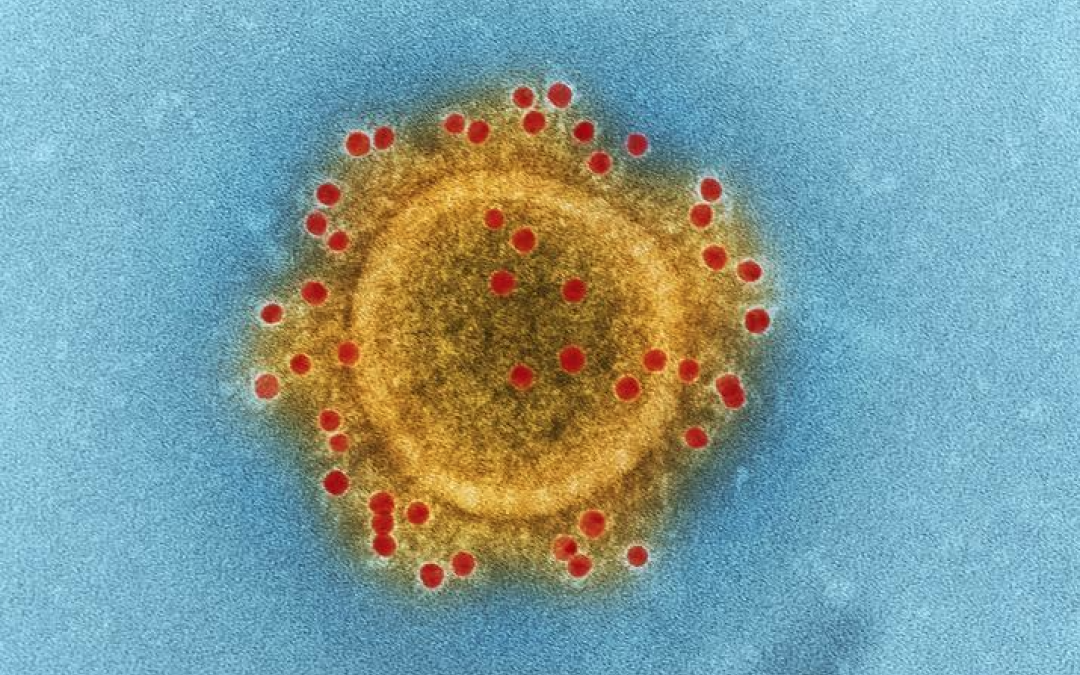
Below is a guide on COVID-19 and Traditional Chinese Medicine written by John Heuertz, who practices Structural Decompression at Element.
There is already a great deal that has been written about the new strain of coronavirus—now called “COVID-19”—but much remains unknown. This virus is challenging public health around the world and people want to be informed. New information is being published on the Internet nearly every day, even multiple times per day. For the curious and concerned, the best way to stay informed with reliable up-to-date information is to frequently visit various official websites. An excellent short list of such websites appears below:
- World Health Organization (WHO) Advice for the Public and Up-to-Date News
- The Centers for Disease Control (CDC) Basic Information on COVID-19
- The CDC link for COVID-19 News and Situation Summary
- The CDC Morbidity and Mortality Report
- CDC link to track the outbreak in the USA
What are the signs of infection?
- FEVER—In the vast majority of COVID-19 cases, the first sign or symptom of an active infection is fever. Between 94% and 98% of infected patients get a fever, whether their case is mild or severe. In about half of the cases the peak temperature of the fever is between 100.5°F and 102°F. In about 30% of the cases the fever is even higher than 102°F; roughly 20% of cases have a very mild temperature.
- COUGH—The second most common clinical feature of COVID-19 infection is cough. About 3⁄4 of active cases develop cough. Most of the coughs are non- productive (little to no sputum). The cough typically develops one to three days after the fever, but there can be a lot of variation with the timing.
- DYSPNEA — Dyspnea is difficult breathing. Over half the cases will develop dyspnea. In nearly every case of severe infection (when hospitalization is required) there will be dyspnea.
- MYALGIA/FATIGUE—Myalgia refers to the type of body ache that is commonly seen with influenza. Fatigue can be quite pronounced. These two symptoms often appear together and are reported in a little less than half of the COVID-19 cases.
By way of disclaimer, it is important to bear in mind that the Chinese government has not made, and will not be making, any official recommendations about using Chinese herbs for the treatment and prevention of COVID-19. To be clear, in all countries and regions, individuals with a suspected exposure should report to their local health officials and strictly observe strategies to control the spread of the disease. [See WHO’s “Recommendation for Best Protective Measures.”]
With that being said, there are things that Traditional Chinese Medicine (TCM) recommends for COVID-19.
As a general precaution for “flu season” (any time there is a statistically high incidence rate of viral infections) the most important strategy to avoiding getting sick is, of course, AVOID EXPOSURE. The specifics of how to avoid exposure are the same for Eastern and Western medicine. For the sake of brevity, I would return your attention once more to the first WHO link above for “protective measures.”
But Chinese medicine provides a second strategy. (To reiterate, it should never be used by itself—only in conjunction with observing the recommended precautions to avoid exposure.) For many centuries, Chinese traditional medicine has utilized various methods of fortifying our bodies’ natural protection against external pathogens.
In TCM, this protection is known as the “upright qi,” “antipathogenic qi,” or zheng qi. (Check out Christina’s blog post from earlier this week about Wei Qi, a specific aspect of zheng qi.) In modern medicine, this closely corresponds to the concept of immunity. The antipathogenic qi can be enhanced with qigong, supported by diet, fortified with herbal formulas, and regulated by managing stressors to our immune system.
Managing stressors to the immune system:
Poor quality sleep, high stress levels, overworking, inflammatory and phlegm-producing diets all diminish our capacity to fight off invading pathogens. It is important to make corrections in these areas if we wish to increase the strength of our antipathogenic qi. A pamphlet on managing stressors can be found here.
Diet:
The best dietary advice TCM has to offer involves the cultivation of deep, nourishing hydration. This cannot be accomplished merely be drinking more water. Deep, nourishing hydration comes from eating clean foods that are hot, “wet,” and relatively easy to digest, such as broth soups (not cream-based or pureed) and porridges for breakfast. Vietnamese phô is a good example of a food that provides deep, nourishing hydration.
Other dietary advice:
- Avoid dehydrating foods like alcohol, carbonated beverages, and caffeine
- Avoid phlegm-producing and inflammatory foods like dairy, gluten, and overly spicy foods
- Avoid eating between meals. Give the digestion a chance to make strong qi and rest.
Chinese Herbal Recommendations
There are currently 7 strains of the coronavirus that can affect humans. Four of them have been around for a very long time and are among the 200 or so viruses known to cause the common cold. In recent years, three new strains have mutated to infect humans. One is SARS, another is MERS. COVID-19 is the latest mutated strain.
In 2003, when SARS was on epidemic watch, three studies were conducted among medical staff taking preventative herbs. In total, the studies included a few thousand participants. In all three of these studies, not one of the participants who took the preventative herbs contracted SARS.[i] This is quite a remarkable statistic! But it is important not to leap to assumptions about the success of similar formulas against COVID-19. Still, it may be worth taking a look at these and similar herbal strategies that fortify the antipathogenic qi, and boost the immune system. The main herbal formula used in the study during the SARS epidemic was a combination of two commonly used formulas — Yu Ping Feng San (Jade Windscreen Formula) and Sang Ju Yin (Mulberry and Chrysanthemum Combination). The action of the former is to fortify the antipathogenic qi against the exterior. The latter formula clears heat and keeps the lungs free.
The study control always included the Jade Windscreen Formula, but substituted anti-toxin and other heat-clearing herbs in place of the Sang Ju Yin. Common anti-toxin herbs found to be successful were forsythia fruit (lian qiao), chrysanthemum flower (ju hua), and honeysuckle flower (jin yin hua). These strategies can be replicated by taking:
- Jade Windscreen Formula + Yin Chiao Formula—Yin Chiao Formula uses both forsythia fruit (lian qiao) and honeysuckle flower (jin yin hua) as the two chief ingredients.
- Jade Windscreen Formula + Sang Ju Yin—This combination is identical to one of the ones used to prevent SARS among health care workers in Hong Kong.
- Children’s Jade Defense Formula—This is Jade Windscreen Formula + Chrysanthemum/ju hua specially formulated for children.
Other herbal strategies for prevention that are safe and worth consideration:
- Bupleurum & Cinnamon Formula (Chai Hu Gui Zhi Tang)—This formula keeps the chest free, drains heat from the lungs, supports the antipathogenic qi and has antiviral properties. Bupleurum & Cinnamon Formula is also commonly used to prevent pneumonia.
- Minor Bupleurum Formula (Xiao Chai Hu Tang) + Yin Chiao Formula (Yin Qiao San)—The first formula is extremely popular in Japan as a cold and flu preventative. It frees the chest, supports the qi, resolves phlegm, and drains heat from the lung. The Yin Chiao Formula is an anti-toxin/ anti-viral formula with the two main herbs used to modify the formulas used to prevent SARS.
[i] Lau J, Leung P, Wong E, Fong C, Cheng K, Zhang S, et al. “The use of an herbal formula by hospital care workers during the severe acute respiratory syndrome epidemic in Hong Kong to prevent severe acute respiratory” Journal of Alternate and Complementary Medicine 2005; 11:49-55; Xu J, Jiang X et al “Clinical observation of Yinhua Yupingfeng decoction in preventing SARS . . .” Conference on the prevention and treatment of SARS in integrated traditional Chinese and Western medicine . . . 2006; 158-159; Zhang L, Chen B, Zeng H “Analysis of fangdu decoction on SARS and zero infection in hospital” Chinese Journal of Hospital Pharmacy 2005; 25:59-60.
John Heuertz has been practicing TCM since 2001. He is licensed in New York and New Mexico and is nationally certified as both an acupuncturist and a Chinese herbalist. John publishes and lectures extensively to colleagues in TCM. He practices Structural Decompression only once a quarter at Element, so call us soon if you want to book an appointment!
To learn more about Structural Decompression, follow the link.