


Grief is a deeply personal and often overwhelming emotion that arises from loss—whether it’s the loss of a loved one, a relationship, or even significant life changes. Traditional Chinese Medicine (TCM) recognizes grief as a natural process but also acknowledges that unresolved or prolonged grief can disrupt the body’s energetic balance. Acupuncture, an integral part of TCM, offers a holistic approach to navigating grief by supporting emotional healing and restoring balance.
Understanding Grief in Chinese Medicine
In TCM, each emotion is linked to a specific organ system. Grief and sadness are primarily associated with the Lung and Large Intestine meridians. The Lungs govern breath and are considered the seat of vitality (Qi), while the Large Intestine is involved in letting go—both physically and emotionally. When grief lingers, it can weaken Lung Qi, leading to symptoms such as fatigue, chest tightness, shallow breathing, and even immune suppression.
How Acupuncture Supports the Grieving Process
Acupuncture works by stimulating specific points along the body’s meridians to move and balance Qi (energy). For those experiencing grief, acupuncture can:
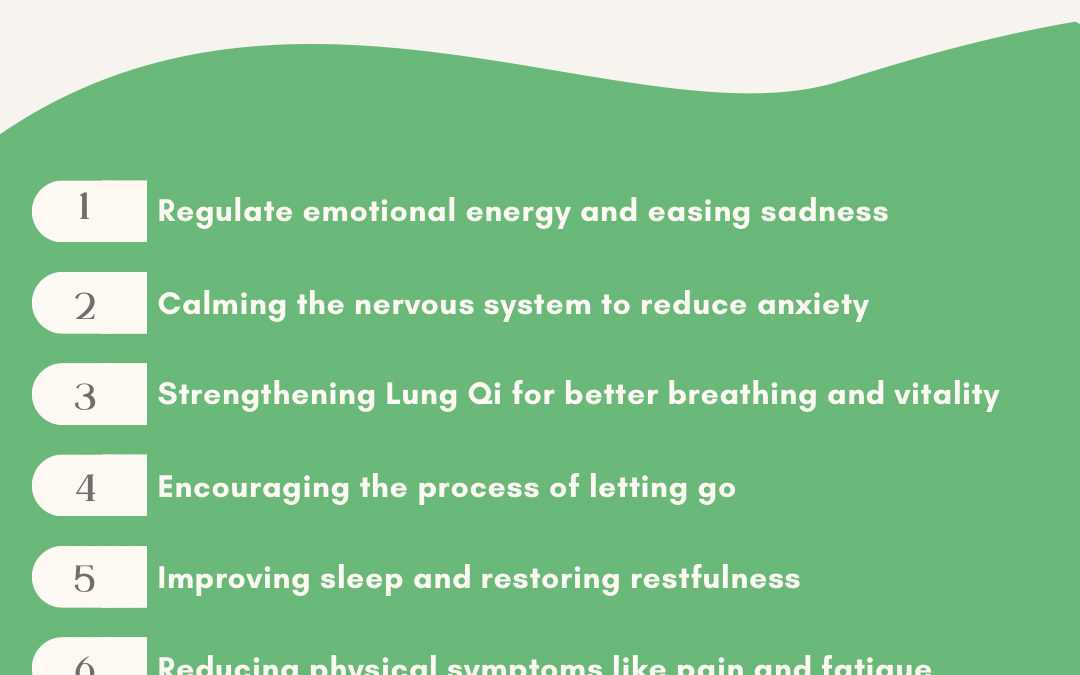
Regulate Emotional Energy: Acupuncture helps release stagnant energy in the Lung and Heart meridians, easing feelings of sadness and heaviness.
Calm the Nervous System: By activating the parasympathetic nervous system, acupuncture promotes relaxation and reduces anxiety, providing emotional relief.
Strengthen Lung Qi: Strengthening the Lungs helps improve breathing and energy levels, supporting the body’s natural resilience.
Encourage Letting Go: Working with the Large Intestine meridian aids in releasing emotional burdens and accepting change.
Improve Sleep: Grief often disrupts sleep, making it difficult to rest and recover emotionally. Acupuncture helps regulate the body’s internal clock, reduce anxiety, and promote deeper, more restful sleep.
Reduce Physical Symptoms: Emotional distress often manifests physically, leading to muscle tension, headaches, digestive issues, or chest tightness. Acupuncture helps release tension, improve circulation, and restore overall physical well-being.
Key Acupuncture Points for Grief
• Lung 1 (Zhongfu): This point disperses Lung Qi and alleviates chest tightness, helping to release sadness and grief.
• Lung 7 (Lieque): Known for opening the lungs and dispersing emotional tension, it also connects to the Large Intestine meridian to support emotional release.
• Heart 7 (Shenmen): A calming point that soothes the mind, reduces anxiety, and supports restful sleep.
• Pericardium 6 (Neiguan): This point calms the heart, eases emotional distress, and alleviates chest discomfort.
• Kidney 3 (Taixi): Strengthens Kidney energy to support the body’s foundation and resilience during emotional stress.
• Large Intestine 4 (Hegu): A powerful point for releasing tension, encouraging the letting-go process, and easing physical pain.
The Role of Acupuncture in Emotional Healing
Acupuncture provides a safe, nurturing space for emotional release and processing. By addressing both the emotional and physical manifestations of grief, it gently guides the body back to balance. Regular treatments can help manage the ebb and flow of emotions, promote resilience, and support holistic healing.
Healing from grief takes time, and acupuncture can be a valuable tool in helping individuals navigate this journey with greater ease and compassion. Through balancing the body’s energy, acupuncture fosters emotional well-being and aids in embracing life after loss.
Grief is a profound journey, and finding the right support can make all the difference. Acupuncture can help restore balance, offering a sense of calm and relief during this difficult time. Complementary approaches like talk therapy and MindBody Grief Coaching can also provide invaluable guidance, helping you process emotions and move toward healing.
You don’t have to navigate grief alone.
Christina Morris, founder of Element Natural Healing Arts, is an acupuncturist, herbalist, Maya abdominal practitioner, reflexologist, and practitioner of functional medicine. Writing about health and wellness provides her with a meaningful way to connect with and support her beloved community. She is deeply committed to the belief that everyone has the potential to achieve greater health and happiness—emotionally, physically, mentally, and spiritually.