


In the past decade, advancements in robotics and machine learning have started to change many aspects of human life. From the automated kiosks in grocery stores to proposed self-driving cars, to driverless train systems in some cities– the zeitgeist seems to be that anything is possible with artificial intelligence and sufficient technology.
The field of health and wellness has been affected by this machine revolution as well. Researchers have developed technology to help ALS patients communicate using their eyes, detect arrythmia from an EKG more accurately than a technician, perform virtual biopsies, and help doctors see patterns in the huge amounts of data collected by hospitals, among many other things.
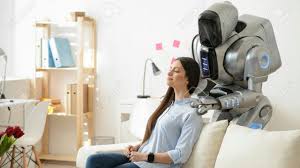
Recent years have seen great leaps in the technology of robot massage therapists. Two years ago, scientists at Singapore’s Nanyang University developed a robot called EMMA, or “Expert Manipulative Massage Automation” to work on patients at their NovaHealth Traditional Chinese Medicine Clinic. The robot works in conjunction with an acupuncturist and a massage therapist. So far, this model only performs on the patient’s back and shoulders, but the intention is to provide a full-body massage. The robot has a fully articulated arm, with soft and warmed silicone tips designed to feel like a human thumb and a palm. It is equipped with sensors that detect the tension in the muscles or tendons, and then uses an algorithm to apply to optimal amount of pressure.
While this innovation may help make massage therapy more accessible, it’s unlikely massage therapists will be replaced by robots anytime soon.
While a robot equipped with special sensors and artificial intelligence may be able to relieve tension in some areas, it will not be able to help you understand what part of your lifestyle may be causing your tensions or adjust its technique in response to human communication or make recommendations on how to stretch, or what exercises may be beneficial. A robot would not be able to take care of complicated situations such as recovery from an injury, herniated discs, nerve pain, migraine, or sensitive and unique gastro distress, just to name a few.
Of course, the human interaction is essential to massage therapy. There’s much more to massage therapy than the mechanics of manipulation and applied pressure. The human connection between therapist and patient has a relaxing, therapeutic, and healing effect that cannot be replicated by a robot.
But there may be a place for high-tech massage therapy robots in the future. It could be a much more efficient, cost-effective way to relieve simple knots and tension for people who are house-bound and possibly more affordable for people in need of numerous treatments in areas that might have fewer therapist options. If used side-by-side with an acupuncturist or massage therapist, there is a possibility to be able to offer alternatives to standard Western medicine, using sophisticated robots.
Clara E.
Originally from upstate New York, Clara moved to Brooklyn in the spring of 2017 to finish her undergraduate degree and pursue her passions for architectural restoration, music composition, and visual art. She works as a receptionist at Element. In her free time, Clara likes to explore new neighborhoods, go to museums, and play the piano.