


One important part of maintaining good foot health is to ensure proper circulation of blood and lymph. That is a major purpose of reflexology. Reflexology is an ancient therapy dating back thousands of years, practiced in China, Egypt, and India. A good foot massage absolutely feels like heaven, but reflexology is heaven and then some–it focuses more on the total state of health, including organs, glands, and structures of the body. Pressure is applied to very specific points and zones on the feet (reflexology can also be done on the hands, ears, and face).
Reflexology has evolved as the knowledge of the human body has expanded. Organ, nerve, tissue, bone, and fascia connections impact how our systems work as a whole. Encouraging good circulation, structural alignment, and relaxation can be key for overall health and balance.
Addressing the feet can encourage a healthier state of being, both locally to the feet and in far-flung areas of the body. Reflexology, also called zone therapy, divides each foot into 5 zones that run the length of the foot. The left foot represents the left side of the body and the right food the right. Therefore the left lung reflex would be located on the left foot and the right lung reflex on the right food. Organs anatomically found on one side, or primarily on one side, would be represented on the foot located on that side. For instance, the gallbladder, appendix, and ascending colon are all located on the right side of the body, so the foot reflex points corresponding to these organs would be found only on the right foot. The left foot would include the spleen, stomach, and descending colon reflexes.
The feet include reflex points representing the entire body. Sinuses, eyes, ears, teeth and jaw reflexes, bronchioles, shoulders, diaphragm, hips, knees, legs, ankles, and spine just to name a few.. and let’s not forget the glands from thyroid, thymus, pituitary, adrenals to ovaries/ testes. The mapping system of the body represented on the feet is genius. The feet are spectacular as are our bodies as a whole.
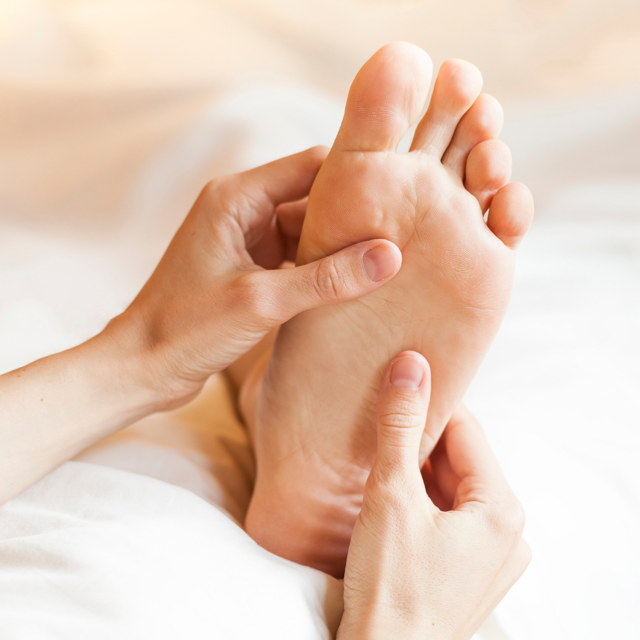
Reflexologists use their thumbs to manipulate points to release tension, stress, and adhesions. The feet are also pulled and pushed, stretched and kneaded to get better circulation of blood and lymph, release congestion of fascia and connective tissue, and improve nerve conductions.
Reflexology is becoming a more common form of therapy in the United States. Many hospitals now offer reflexology to their patients. The American Reflexology Certification Board (ARCB) states that a primary benefit of reflexology is relaxation. The ARCB states that as well as bringing about relaxation, reflexology also promotes balance, reduces stress, and improves circulation. Studies are currently being conducted around the world on reflexology and its effect on numerous health conditions. Some of the research includes reflexology and its impact on gynecological and urogenital disorders; on cancer; on cardiovascular disorders; musculoskeletal, gastrointestinal, neurological, emotional, and psychological disorders. To access research studies on reflexology you can go to www. reflexology-research.com.
Contributor
Doctor of acupuncture and Chinese medicine, Maya abdominal practitioner, and reflexologist Christina Morris is the founder of Element Natural Healing Arts. Writing about health and wellness gives her an outlet to express her care and concern for her beloved community. She believes everyone can achieve better health and happiness–emotionally, physically, mentally, and spiritually.