



In education today, there is increased pressure on children to do well, in a particular way. The way school is structured, kids need to sit still, focus, deal with constant stimulation, and endure a great deal of test taking and evaluation. This can be problematic for many children and can lead to stressed-out or anxious kids. It can also become very hard for them to relax. This can mean constant excess energy, which causes common issues, like “bouncing off the walls,” “meltdowns,” or the inability to fall asleep.
Contemporary children also face over-scheduling, especially in NYC. As parents we can get tangled up in wanting “the best” for our children, which is often perceived to be taking advantage of the endless opportunities here in NYC, including signing them up for multiple classes with little or no down time.
Down time is so important for all of us, but especially for the developing mind of a child. Giving the mind a break from constant stimulation allows us time to take in new things, to have new thoughts. Time without goals, without plans, time just to be can be incredibly fulfilling for children, offering a place for great creativity. Boredom should not be dreaded but rather seen as an opportunity for your children to reflect and discover their internal voice, to get to know themselves, discover what they enjoy, and follow their instincts. Lying on a blanket looking at the clouds is not a waste of time. Instead it’s a time of wonder, exploration, and imagination development.
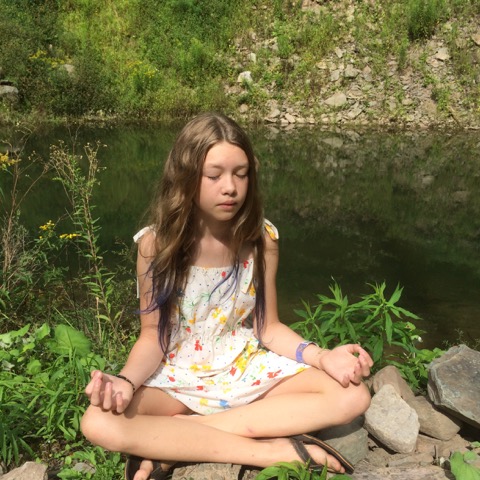
Meditation can be wonderful for children. It is a way of giving their busy brains a break. There are thousands of studies showing the positive impact of meditation and mindfulness on our health and well-being and we must remember that children can benefit just as much as adults. Meditation allows kids to refresh their ability to concentrate, help alleviate stress and anxiety, and to help develop self-awareness and self-regulation.
I work with children, both in schools and privately, and I have seen firsthand the benefits of meditation. Despite their abundant energy, a meditative state is quite natural for children. They are enriched by learning about the connection between mind and body, focusing the mind, not being overwhelmed by stress, anxiety, anger, and other emotions.
How can you get your child to meditate or relax? Children learn by what they see. If you are stressed out, always on your phone, not making time to relax or meditate, then they will mimic you and not appreciate the importance of self-care.
I have meditated throughout my children’s childhood (they are now 10 & 13) and they often come and sit beside me (when they were younger, they sat in my lap) when I meditate in the mornings to just enjoy that quiet time. From a very young age, they knew that it was an important time and they adjusted their energy naturally.
The build-up to bedtime can be a wonderful time to practice relaxation with children. Try reading together, some restorative yoga, breath work, or a guided meditation.
Brogan Ganley is an integrative therapist working with both adults and children. She specializes in relief from stress, anxiety, pain, and insomnia.