


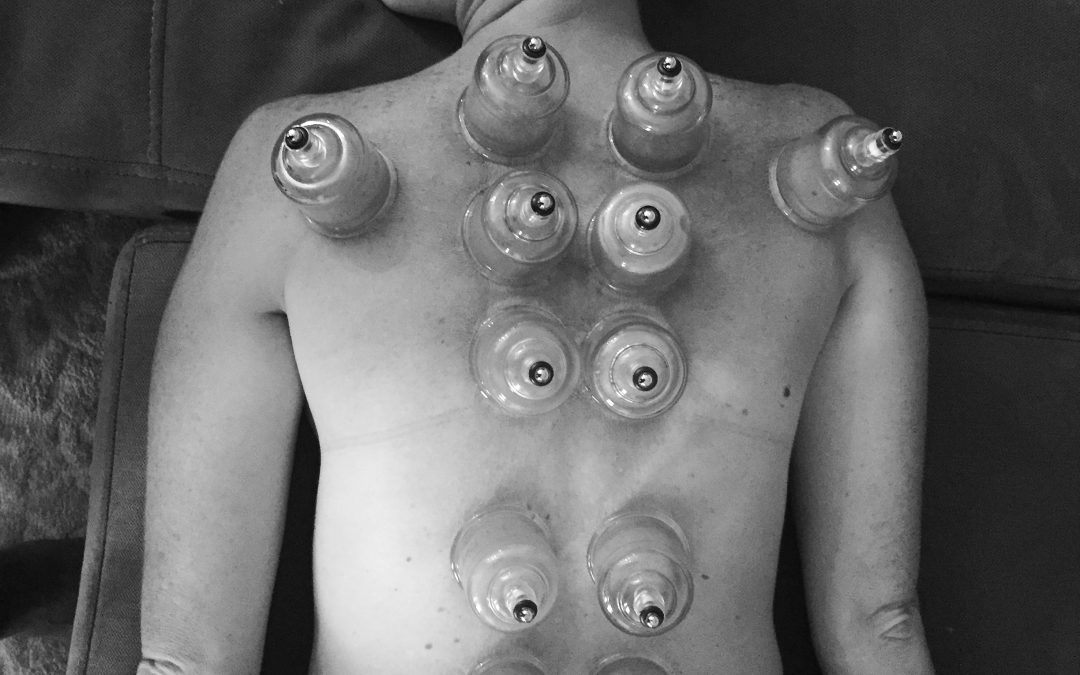
Cupping therapy is believed to date back to 3000 BC. History shows cupping was a common practice in Egypt, Greece, and China, eventually spreading worldwide.
The suction of cupping is used to increase circulation, soften tight muscles, loosen adhesions, lift connective tissue, bring hydration and blood flow to the tissues, and drain excessive fluids and toxins by opening lymphatic pathways. Traditional cups are glass, into which a flame is inserted to create suction.There are also bamboo cups and, most recently, the more common pump cups and silicon cups. Cups can stay stationary on the body up to 15 minutes, but the duration varies depending on the condition being treated and the patient. Cups can be manipulated over the skin, in a sliding movement.
The goal of cupping is to release stagnation of blood and energy (this often takes the form of pain and tight muscles) and internal heat (this heat can be from a cold, bronchitis, skin rashes, and hives, among others). Overall, cupping can help with chronic pain relief, pre-surgery prepping and post-surgery recovery, to improve sports performance, muscle pain, anxiety, stress, asthma, pneumonia, fatigue, insomnia, chronic headaches, fibromyalgia, neuralgia, carpel tunnel, shoulder issues, bursitis, tendonitis, plantar fasciitis, poor posture, aid in detoxification, and digestive ailments. This is just to name a few!
With stationary cupping the skin may turn red or purple as the blood surfaces, creating perfectly round marks. Sliding cups can also create redness and discoloration to the skin. It’s not uncommon for a practitioner to apply a topical liniment after cupping to enable better absorption locally and promote circulation, pain relief, and detoxification.
In general, cupping is safe but should be used with caution on children, the elderly, diabetics, and those on blood thinners. Sufficient hydration is essential after cupping to aid in proper toxin elimination. It’s also important to avoid chills and drafts and keep cupped areas covered immediately following a session to maximize healing benefits and circulation. Avoid hot showers, steam, saunas, and exercise for four hours after a cupping treatment.
If you haven’t tried cupping, give it go! If you are worried about people seeing the distinctive cupping marks, perhaps avoid treatment before a wedding, major photo op, or a trip to the beach. Still, cupping marks are definitely more common, even becoming trendy, as more and more people are realizing the potential of this ancient healing technique.
Contributor
Acupuncturist, herbalist, Maya abdominal practitioner, and reflexologist Christina Morris is the founder of Element Natural Healing Arts. Writing about health and wellness gives her an outlet to express her care and concern for her beloved community. She believes everyone can achieve better health and happiness–emotionally, physically, mentally, and spiritually.