


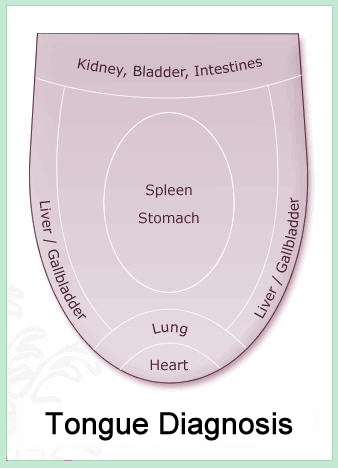
There is a lot to be told about a person’s health based on the condition of the tongue. Observation of the tongue is a pillar of diagnosis in Traditional Chinese Medicine that can indicate internal imbalances. The tongue is like a map, used to guide a practitioner to areas and conditions of concern. Specific locations on the tongue correspond to different areas of the body. The tip of the tongue corresponds to the heart and the lungs, the sides to the liver and the gallbladder, the middle of the tongue to the spleen and the stomach, and the root of the tongue to the kidneys and urinary bladder. Color, coating, spots, bumps, and cracks in particular areas of the tongue can indicate imbalances in the body, representing present disease or future health issues.
Not only are the specific areas of the tongue meaningful, the tongue has 4 basic diagnostic components: the tongue body shape, tongue body color, coating, and moisture of the tongue.
The body of the tongue is mostly made from muscle so the actual shape can vary based on particular conditions and the overall health of an individual. The shape represents nutritional adequacy and proper blood involvement including flow and volume. Shapes can include swollen, stiff, flaccid, teeth marks, short, long, fat, thin, and cracked.
The actual tongue body color can vary person to person also representing nutritional adequacy, blood flow and volume, as well as factoring in some more specific organ functions of the liver, heart, lungs, spleen, and kidneys. Tongue body colors include: pale, red, deep red, purple, blue, and green.
Other tongues qualities can include rough, smooth, delicate, wrinkled, deviated, rolled, or quivering, with colored spots such as red, white, or black.
The tongue coating is the layer over the tongue mainly representing the stomach’s energetic function, indicative of digestive health. This coating can be thin, thick, peeled, shiny, or have no coating at all. Colors can vary, such as white, yellow, brown, or black. A thin white coating indicates the stomach is digesting food properly.
Moisture of the tongue indicates the state of fluid in the body. A normal tongue should be very slightly moist. Other variations include wet, dry, sticky, or slippery consistencies, which can be indicative of deeper rooted health conditions.
Tongue observation is important in TCM diagnosis. Changes in the tongue reflect changes in the body’s overall health for the good, or for the bad.
A normal tongue is regular shaped, soft in quality, free in motion, a pale red in color, with a thin white coating that is neither dry nor overly moist.
Contributor
Acupuncturist, herbalist, Maya abdominal practitioner, and reflexologist Christina Morris is the founder of Element Natural Healing Arts. Writing about health and wellness gives her an outlet to express her care and concern for her beloved community. She believes everyone can achieve better health and happiness–emotionally, physically, mentally, and spiritually.